
Choosing where to invest in real estate around Nairobi is no longer just about proximity to the CBD. With rising land prices in prime suburbs such as Karen, Lavington, and Kilimani, both investors and end-users are increasingly turning to satellite towns that promise affordability today and strong returns tomorrow.
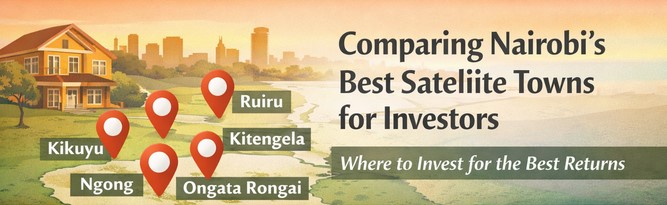
This guide compares five key areas—Kikuyu, Ngong, Ruiru, Kitengela, and Ongata Rongai—through the lens of future growth, which remains the most reliable predictor of long-term real estate performance.
We focus on three critical determinants of property value growth:
- Infrastructure development (roads, rail, utilities)
- Population growth (housing demand and rental absorption)
- Economic and residential activity (schools, commerce, lifestyle appeal)
Kikuyu v Ngong v Ruiru v Kitengela v Ongata Rongai
Trying to decide where to invest in Nairobi real estate? We compare Kikuyu, Ngong, Ruiru, Kitengela & Ongata Rongai based on growth, rental income, infrastructure & future returns.
The goal is simple: help you decide where to invest for capital appreciation, rental income, or a future home that will hold and grow its value.
Understanding Growth Cycles in Real Estate
Real estate markets typically move through three stages:
- Early-growth stage – Infrastructure is limited, land is relatively cheap, and future projects drive speculation.
- Growth stage – Population increases rapidly, infrastructure projects roll out, and prices begin accelerating.
- Maturity stage – Infrastructure is largely complete, demand is stable, and price growth becomes steady rather than explosive.
The strongest capital gains are usually realized when buying in areas transitioning from early-growth to growth, before infrastructure is fully completed and priced in.
With this framework in mind, let’s examine each area.
Quick Snapshot of Growth Stages
Looking at Kikuyu, Ngong, Ruiru, Kitengela, and Ongata Rongai, all five are viable markets—but they are at different stages of growth, which directly affects future returns.
- Already infrastructure-mature: Ruiru, Kikuyu, Kitengela
- Rapid population growth: Ruiru, Ongata Rongai
- Balanced growth (infrastructure + population): Ngong
Let’s briefly break this down.
Kikuyu: Stability, Convenience, and Mature Growth
Overview
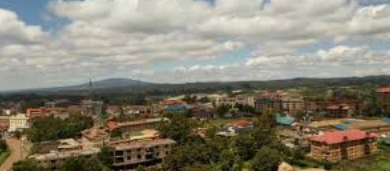
Kikuyu has evolved into a well-established residential town that appeals strongly to families, professionals, and long-term homeowners.
Its appeal lies in its calm environment, proximity to Nairobi’s western suburbs, and reliable infrastructure.
Infrastructure & Accessibility
- Direct access to the Southern and Western Bypass
- Well-developed internal road network
- Reliable water, electricity, and sewer services
- Proximity to Karen, Westlands, and the CBD
Most major infrastructure projects in Kikuyu are already complete. This positions the area firmly in the mature stage of growth.
Population & Demand
Kikuyu’s population growth is steady rather than explosive. Demand is driven by: – Families seeking larger homes outside the CBD – Professionals working in Karen, Upper Hill, and Westlands – Private schools and learning institutions
Pricing & Returns (Approximate)
- Land: KES 18M–30M per acre (depending on proximity to bypasses)
- 3–4 bedroom houses: KES 12M–25M
- Rental yields: Moderate and stable
Investment Outlook
Kikuyu is ideal for low-risk investors and end-users seeking stability, lifestyle, and predictable returns. Capital appreciation is likely to be steady but limited, as most infrastructure-led growth is already priced in.
Ngong: The Highest Upside Growth Play
Overview
Ngong represents one of the strongest future growth stories among Nairobi’s satellite towns. Unlike fully developed markets, Ngong is still transitioning through the growth phase, with major catalysts yet to be completed.
Infrastructure & Future Catalysts

- Proposed Ngong–CBD commuter rail line
- Planned dualling of the Karen–Ngong Road
- Karen–Kibiku bypass, opening up the Ngong–Suswa corridor
- Strategic positioning along the Nairobi–Suswa development axis
These projects are not yet fully priced into land and housing values, creating a clear window for capital gains.
Population & Demand
Ngong is experiencing rising demand from: – Buyers priced out of Karen and Lang’ata – Investors targeting future appreciation – End-users seeking cooler climate and scenic views
Pricing & Returns (Approximate)
- Land: KES 10M–20M per acre (varies widely by location)
- Standalone homes: KES 10M–22M
- Rental yields: Growing, with strong upside
Investment Outlook
Ngong offers the best balance of infrastructure growth, population inflow, and affordability. For investors seeking capital appreciation over the next 5–10 years, Ngong stands out as the top choice.
Ruiru: Rental Demand and High Absorption
Overview
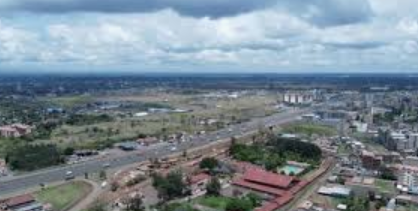
Ruiru has transformed into one of Kenya’s fastest-growing residential and rental markets.
This growth is driven largely by its proximity to Thika Road, good educational institutions and Nairobi’s industrial zones.
Infrastructure & Accessibility
- Direct access to Thika Superhighway
- Proximity to industrial parks and commercial hubs
- Well-developed transport links to the CBD
Infrastructure in Ruiru is largely complete, meaning future growth will be driven more by densification than new big road projects.
Population & Demand
Ruiru’s population growth is among the fastest in the Nairobi metro area. Demand is fueled by: – Young professionals – Factory and industrial workers and housing developments.
Pricing & Returns (Approximate)
- Land: KES 25M–35M per acre
- Apartments: KES 3.5M–7M
- Rental yields: High and consistent
Investment Outlook
Ruiru is ideal for investors focused on current rental income rather than future returns or speculation. But this is subject on the location of the property since it has its outskirts.
All the same, capital appreciation exists but is not on high incremental rates, reflecting its maturity and near-plateau stage.
Also, capital appreciation is spreading on the outskirts of Ruiru like Murera, Mugutha rather than in the main developed areas of Ruiru.
Kitengela: Affordability and Volume Housing
Overview
Kitengela remains one of the most accessible entry points for first-time buyers and investors due to its affordability and large tracts of developable land.
Infrastructure & Accessibility
- Direct access via Namanga Road
- Connectivity improved by the Nairobi Expressway
The above major infrastructure projects are largely complete, placing Kitengela closer to the mature stage.
Population & Demand
Growth is driven by: – Affordable housing seekers – Young families – Developers building gated communities
Pricing & Returns (Approximate)
- Land: KES 8M–15M per acre
- Houses: KES 6M–12M
- Rental yields: Moderate
Investment Outlook
Kitengela works best for long-term hold strategies and volume development, but future appreciation may be slower unless new major infrastructure corridors emerge.
Ongata Rongai: Population-Driven Growth
Overview
Ongata Rongai is one of the most densely populated satellite towns, with demand consistently outpacing infrastructure development.
Infrastructure & Growth Potential
- Heavy reliance on Magadi Road, which requires expansion
- Potential uplift once road expansion occurs
- Future benefit from expanded SGR regional connectivity
Population & Demand
Rongai’s growth is driven by: – Proximity to Nairobi – Strong student and workforce population – High rental absorption
Pricing & Returns (Approximate)
- Land: KES 15M–25M per acre
- Apartments: KES 4M–8M
- Rental yields: High
Investment Outlook
Ongata Rongai offers strong rental demand today, with significant upside tied to infrastructure upgrades, especially Magadi Road expansion.
Comparison where each Suburb Stands
| Area | Infrastructure Stage | Approximate Price Range (Residential Land / Housing) | Rental Yield Outlook | Best Investor Type |
| Kikuyu | Mature – major roads & utilities largely complete | Land: KES 18M–30M per acre Houses: KES 12M–25M | Stable, moderate yields | End-users, low-risk investors, families seeking long-term stability |
| Ngong | Growth stage – major projects upcoming | Land: KES 10M–20M per acre Houses: KES 8M–22M | Growing yields with strong upside | Capital appreciation investors, early movers, long-term holders |
| Ruiru | Mature – infrastructure anchored by Thika Road | Land: KES 25M–35M per acre Apartments: KES 3.5M–7M | High and consistent yields | Rental income investors, apartment developers |
| Kitengela | Mature – Namanga Road & Expressway complete | Land: KES 8M–15M per acre Houses: KES 6M–12M | Moderate yields | Entry-level investors, mass housing developers, first-time buyers |
| Ongata Rongai | Growth stage – infrastructure lagging population | Land: KES 15M–25M per acre Apartments: KES 4M–8M | High yields with upside potential | Rental investors, long-term appreciation seekers |
Final Comparison & Verdict
- Best for both rental income and capital growth: Ngong
- Best for current rental income: Ruiru, Ongata Rongai
- Best for stability & end-use: Kikuyu
- Best for affordability & entry-level investors: Kitengela
Why Ngong Stands Out Overall
Among the five areas, Ngong offers the most compelling balance between current rental income and future growth potential.
Unlike mature markets where most gains are already priced in, Ngong is still in a true growth phase, meaning investors can benefit both from today’s demand and tomorrow’s infrastructure-driven appreciation.
From a rental perspective, Ngong already enjoys strong and rising demand.
It attracts tenants priced out of Karen and Lang’ata, professionals working along Ngong Road and Upper Hill, as well as families seeking a quieter environment with good schools and cooler weather.
This creates consistent occupancy levels today, while rental rates remain affordable enough to support high absorption.
What truly sets Ngong apart, however, is what lies ahead. The proposed Ngong–CBD commuter rail has the potential to dramatically shorten commute times and reposition Ngong as a highly connected residential hub.
Once operational, rail connectivity historically leads to higher land values, stronger rental demand, and increased investor activity—particularly for apartments and gated communities near stations.
In addition, the planned dualling of the Karen–Ngong Road and building of the proposed EmbulBul–Kibiku bypass will unlock the perennial Ngong traffic and ease congestion.
These projects will open up the Ngong–Suswa axis, bringing commercial activity, better accessibility, and a new wave of residential developments.
Importantly, much of this future value is not yet reflected in current prices, giving early investors a significant advantage.
Ngong also stands to benefit from broader regional connectivity as the SGR network reaches full operational capacity, especially once the Nairobi–Kisumu route becomes active.
Improved intercity movement enhances land demand along feeder corridors, further strengthening Ngong’s long-term outlook.
In summary, while other areas may outperform Ngong in either rental income or stability, Ngong is the only market in this comparison that scores highly on all fronts: current rental demand, upcoming infrastructure, population growth, and room for capital appreciation.
For investors seeking both income today and substantial growth over the next 5–10 years, Ngong presents the strongest overall case.
Important Disclaimer
All prices, rental ranges, and infrastructure timelines mentioned in this article are approximate and indicative, based on prevailing market conditions and publicly available development plans at the time of writing.
Real estate markets are influenced by multiple factors including policy changes, economic conditions, interest rates, and execution timelines of infrastructure projects, which may vary or change over time.
This guide is intended to provide a long-term strategic perspective, not short-term speculation or financial advice.
Investors and homebuyers are encouraged to conduct independent due diligence, visit locations physically, and consult licensed real estate professionals before making any purchase decisions.
Final Word
If you are investing for future value growth, Ngong currently offers the most compelling opportunity, as major infrastructure projects are still ahead.
For investors prioritizing cash flow, Ruiru and Rongai deliver strong rental performance, while Kikuyu and Kitengela provide stability and lifestyle appeal.
The smartest strategy is aligning your investment choice with where each market sits in its growth cycle—because in real estate, timing matters as much as location.